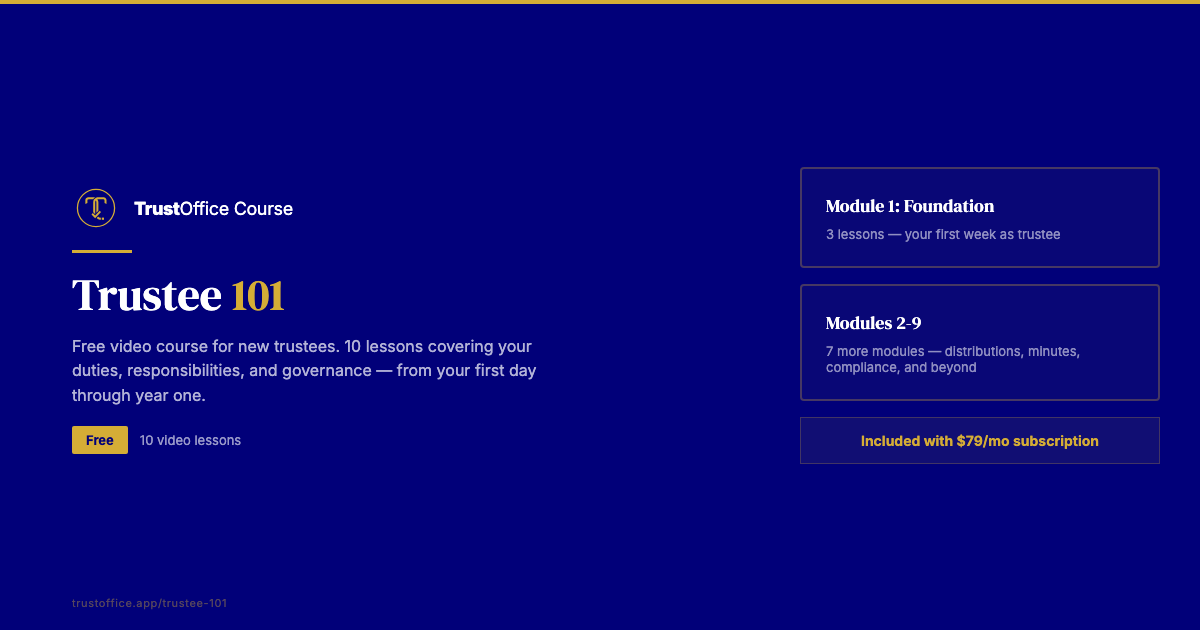
Enroll in a Free Fiduciary Course to Improve Your Abilities Today
Taking a free trustee course can significantly boost one's professional abilities. It offers important knowledge regarding trustee duties and wealth management. Learners can advance at their own rhythm while engaging with experienced practitioners. This option not only deepens comprehension but also paves the way for professional development. However, many may ponder what tangible abilities they can expect to develop and how these can be implemented in everyday business situations.

Important Expertise You'll Master From a Free Trustee Course
A no-cost trustee program furnishes participants with essential skills vital for sound management and oversight. The course content covers key areas such as financial literacy, permitting trustees to comprehend budgets, financial statements, and investment approaches. Participants also gain insights into regulatory obligations, guaranteeing compliance with regulations and ethical standards.
Furthermore, the course enhances tactical planning skills, equipping individuals to contribute to long-term company goals. Strong communication skills are an additional crucial element, enabling trustees to express concepts distinctly and interact with stakeholders effectively.
In addition, teamwork and leadership skills are highlighted, fostering collaboration among board members and furthering a productive deliberation process. Conflict resolution strategies are also covered, equipping participants to address disagreements in a professional manner.
Fundamentally, these competencies not only equip individuals for their roles as trustees but also advance their overall management expertise, making them key players to any organization.
Key Advantages to Join a Free Trustee Class for Job Progression
A large number of specialists attempt to find ways to enhance their vocational paths, and taking a gratis trustee course supplies unique advantages that can greatly boost one's professional growth. To begin with, these courses furnish essential expertise about trustee obligations, enhancing a professional's authority in their field. Acquiring the ethical and legal obligations of a trustee can establish novel employment prospects and responsibilities.
Additionally, connecting with industry experts and peers during these courses can generate beneficial relationships that may enable career advancement. Participants also acquire practical abilities in accounting and oversight, which are increasingly sought after in multiple sectors. Finally, the flexibility of online formats enables individuals to learn at their own pace, making it simpler to balance education with existing work commitments. Overall, enrolling in a free trustee course not only expands knowledge but can also significantly improve professional prospects and career development.
Finding the Top Free Trustee Program for You
How might one locate the most appropriate free trustee course from the large selection accessible? First, people need to copyrightine their exact objectives and professional aspirations, determining what competencies or learning gaps they intend to cover. Next, investigating curriculum and design is essential; a structured course description can indicate whether the course will align with your needs.
Additionally, considering the credentials of the educators can deliver insight into the caliber of learning delivered. Testimonials and reviews from former participants are crucial, as they reflect genuine experiences and results.
Finally, evaluating the versatility of the course design—whether it is self-paced or organized—can aid in choosing a course that suits one's way of living. By considering these factors, learners can reach a more informed decision, ensuring the selected program corresponds with their career objectives and study preferences.
Effective Approaches for Getting the Most Out of Your Trustee Course
Achieving the greatest benefits of a trustee course calls for a careful approach. Participants need to initiate by establishing clear goals and identifying the exact skills or knowledge they aim to acquire. Active participation in the learning experience is essential; this includes joining discussions, posing questions, and working with peers. Regular review of the course materials aids in reinforcing understanding and retention of key concepts.
Furthermore, it is helpful to document information and compile outlines of important topics, enabling easier revision afterward. Connecting with peer attendees can provide useful perspectives and support, cultivating a community atmosphere. Utilizing supplementary resources, such as suggested texts or web-based discussions, can improve comprehension and application of acquired knowledge.
Ultimately, putting into practice the knowledge in real-world situations, whether through real-life scenarios or simulations, strengthens understanding and enhances self-assurance in trustee duties. By adhering to these approaches, individuals can fully leverage their trustee course training discover the information for personal and professional growth.
Real-World Applications of Trustee Skills in Administration
Trustee abilities are vital in effective governance, allowing individuals to traverse complex organizational landscapes. These competencies are critical for fostering openness, responsibility, and principled choices within various entities, including nonprofits, educational institutions, and corporate boards. Trustees outfitted with strong analytical abilities can evaluate organizational performance, fiscal well-being, and compliance with regulations, thus improving overall governance.
Moreover, strong interpersonal competencies allow trustees to work with stakeholders, guaranteeing that diverse perspectives are taken into account in decision-making processes. Conflict resolution skills are just as vital, since they help copyright harmony and collaboration among board members and other stakeholders. Additionally, strategic planning competencies enable trustees to coordinate organizational goals with wider purposes, ensuring endurance and growth. In this way, the application of trustee skills in governance strengthens institutional frameworks but also cultivates trust and integrity within communities and organizations.
Frequently Commonly Asked Questions
Do Industry Bodies Accept Complimentary Fiduciary Training?
Free trustee programs may not always be acknowledged by professional organizations. Recognition usually relies on the training institution and the specific accrediting body, so participants should verify qualifications before enrolling in any course.
How much time Does a Typical Free Trustee Course Take to Complete?
A conventional no-cost trustee course normally takes between four to eight weeks to complete. Course timeline may fluctuate depending on the provider, subject matter depth, and learner involvement, enabling versatility in learning schedules.
Can I Receive a Certificate After Finishing a Free Trustee Course?
Yes, individuals can typically get a certificate after completing a free trustee program. However, certificate options may vary by organization, so participants should confirm the particular requirements with the program provider before registering.
Are there Caps to How Much Fiduciary Courses I'm Permitted to Enroll In?
In typical situations, there is no restriction on how many trustee courses you can enroll in. Students are encouraged to complete several courses for broadening their knowledge and skills in trustee functions and stewardship.
What Qualifications Do You Need to copyright in a Free Trustee Course?
To enroll in a complimentary trustee program, participants typically need a fundamental understanding of finance basics, commitment to the program length, and sometimes previous background in trustee positions. Particular prerequisites may differ by institution.